Marketing strategy
8 Min read
3 emotional buying triggers to pull for better case studies
Great case studies move prospective audiences from interest to action. What separates great from good in customer success storytelling isn’t the most granular data, or the most novel use cases. Instead, it’s carefully crafting the story to help readers connect with the problem and understand what it must feel like to solve it.
Are your customer stories missing these emotional triggers that turn a case study into a sales driver?
1. “We can win this” — Gaining a clear competitive advantage
Anyone competing for dollars or downloads understands the anxiety that competitors might have the upper hand. Giving your customers confidence in their advantage, then, is among the most impactful ways to add “soft value” to the products or services you’re selling.
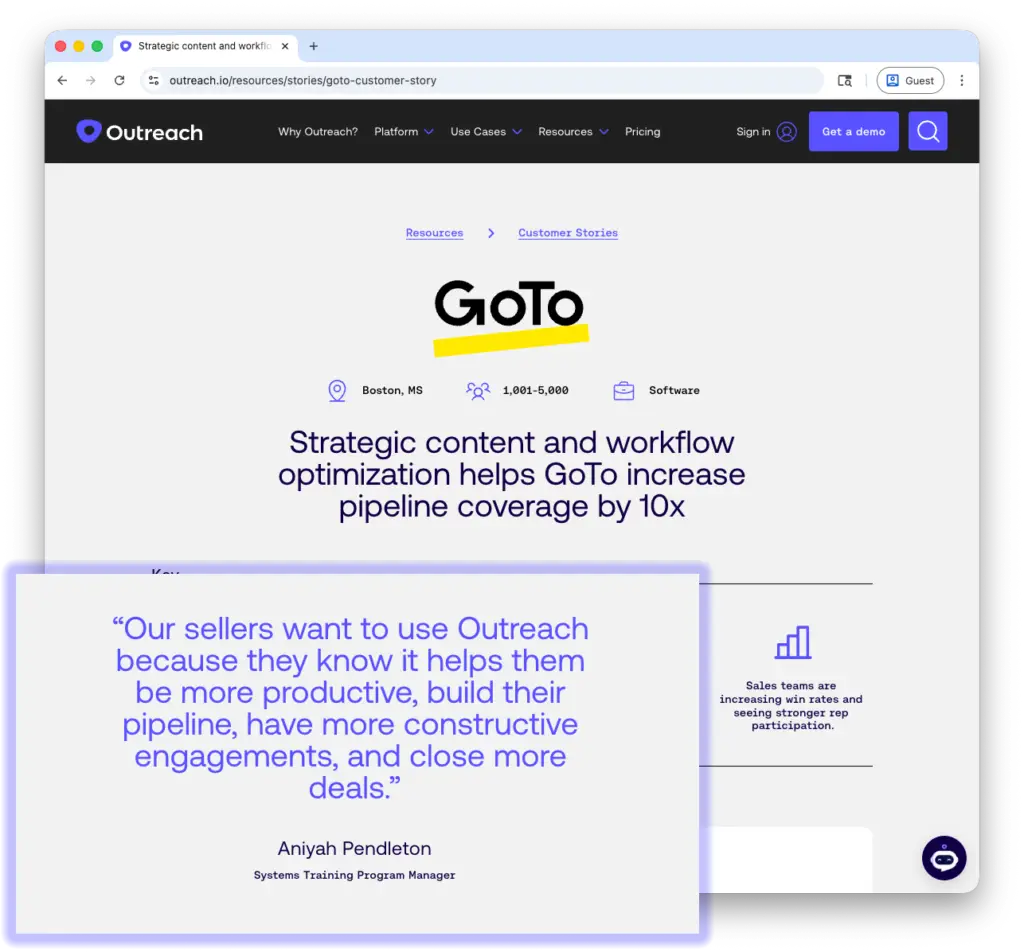
Let’s look at a story from Outreach, a sales communications platform, as a great example of how to highlight and accentuate this soft value:
Their customer GoTo recognized that their existing process for validating leads and filling the sales pipeline was a mess. Outreach’s story very clearly translates the anxiety GoTo brought into the process of solving these problems: a GoTo spokesperson is quoted saying that their existing tool “was a burden to maintain,” “really bogged down our sellers,” and created guesswork for sellers that was wasting time.
At the top of the sales funnel, burdensome technology and wasted time put you behind the competition. To get the advantage back, you need to qualify leads faster and unify your engagement strategy for pulling good leads through the funnel.
Sure enough, by the end of the story, Outreach highlights that their customer feels like they’re closing more deals because of the problems Outreach helped them fix at the top of the funnel:
“Outreach… helps them be more productive, build their pipeline, have more constructive engagements and close more deals.”
That feeling of having the edge? Outreach is showing their customer feels that not only about the core problem they were solving, but through the whole sales cycle. If the initial anxiety described was “sellers aren’t set up for success,” the end result nicely inverts to “Outreach helps us close more deals.”
Here are some other emotion hooks and inversions you can adapt to demonstrate the competitive advantage you give your customers:
- “We’re losing customers and our support team can’t keep up with complaints” → “Our support team has a clean library of content to address common complaints quickly, and a concrete escalation strategy helps us solve bigger issues with care, so we keep more customers.”
- “We produce a lot of content, but Sales teams say they still need more pipeline” → “When we got better measurement tools in place, we could see which marketing channels actually contributed to the most deals by the end of the sales cycle”
2. Status and Identity Elevation
Businesses and the people that run them generally want to be held in high regard. It’s only human to hope that the people you deal with day-to-day see you as leaders, innovators or part of an elite group.
Great B2B case studies demonstrate how your business helped customers become “top dog” in their area of expertise. This is something of an extension of the clear competitive advantage we discussed in part one, but it’s not about helping your customers win business, it’s more about being the difference-maker as they build a powerful reputation. And the more swagger your customers bring to these stories, the more social proof they provide for you by extension.
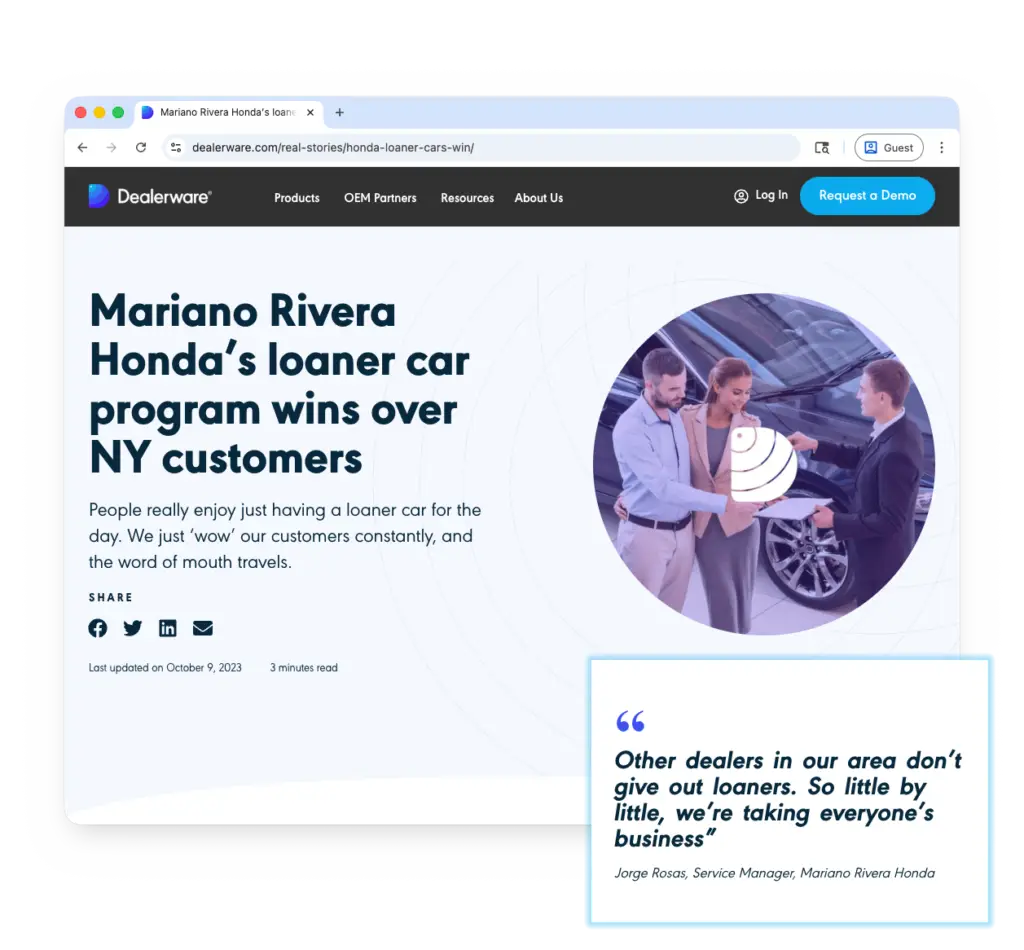
Take this quote from a Honda dealership service manager as a great example: “Other dealers in our area don’t give out loaners. So little by little, we’re taking everyone’s business”
This comes from a case study by Dealerware, a software company that helps car dealerships manage loaner-car and rental programs more efficiently. These programs are often expensive for dealers, but when done right, they can bring in a lot of business and even add to the ways a dealership makes money.
Dealerware’s case study, “Mariano Rivera Honda’s loaner car program wins over NY customers,” explains how their software helped their customer create a unique experience a step above other dealerships in the area.
“We’re selling experiences here… we give [customers] a car and tell them to enjoy their day, and the word of mouth keeps traveling.”
These powerful quotes are paired in the story with detailed explanations of how Mariano Rivera Honda uses Dealerware’s software to handle specific tasks, drawing a clear line between the problems readers might be facing, how Dealerware will help them solve those problems, and the feeling of superiority they’ll gain once they start using the tools.
Some other great ways to demonstrate the status and reputational benefits of your work for your customers are:
- Award wins — nothing says “top dog” like a trophy. Helping your customers win awards for the work you do together naturally elevates their reputation and your own: when others come asking how they overcame a challenge in award-winning fashion, they’ll probably say “we never could have done it without [your tool or service].”
- The value of repeat business and referrals is a critical data point for any company. Showcasing growth in retention, upsells, or referral sales is an excellent way to demonstrate that you’ve helped a customer monetize their reputation.
3. Security and Peace of Mind
Controlling for risk is a basic element of life and work, but talking about it can feel like walking a fine line.
You’ve probably heard someone say they don’t want to lean on “F.U.D” — fear, uncertainty and death — in marketing or communications, and it’s right to not use scare tactics in conversations with prospects. But the reality is that prospects probably worry about money lost; they’re probably uncertain about how some investment will return value; and they almost certainly have had some sleepless nights thinking “is this the end of my business?”
So, how should we talk about risk?
Take a clue from your doctor or a cybersecurity expert: great case studies about managing risk should lay out the potential damages as objectively as possible, then lean heavily on the emotional triggers of relief, trust and opportunity.
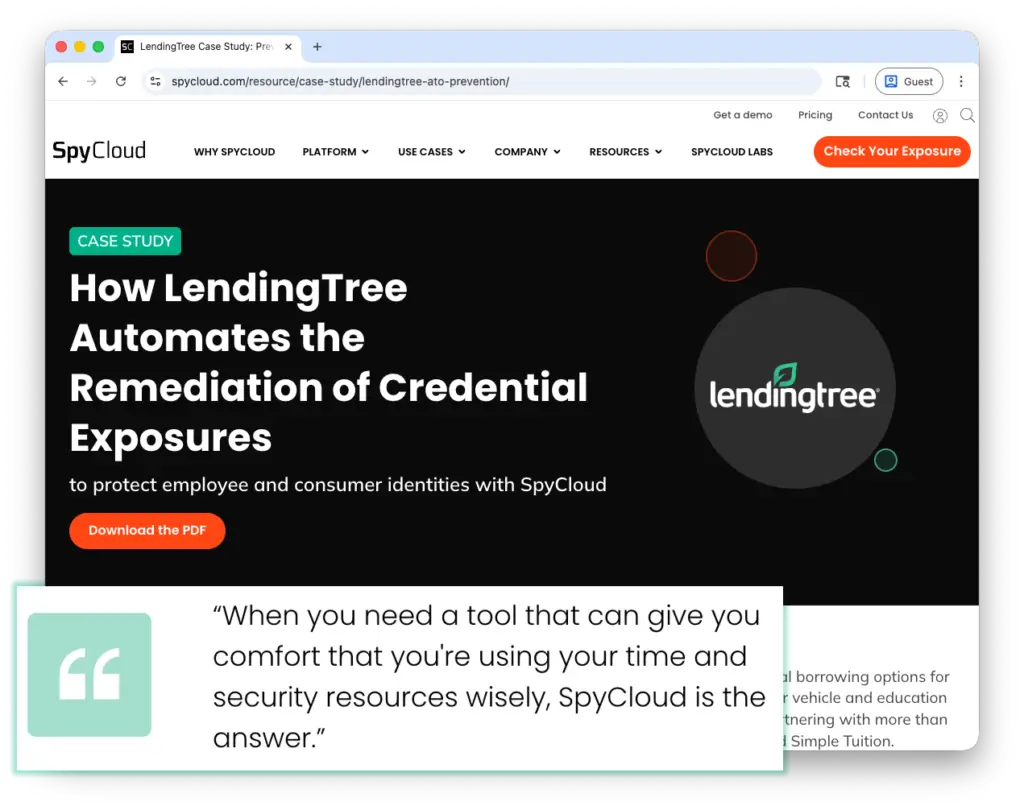
There are endless examples of great, security-focused case studies from cybersecurity companies serving finance businesses. SpyCloud, a company that helps its customers understand their exposure to cybercrime, does a great job highlighting their customers’ peace of mind in their case studies.
One of those customers is the online consumer loan company LendingTree, who said “When you need a tool that can give you comfort that you’re using your time and security resources wisely, SpyCloud is the answer.”
In the process of describing how they helped LendingTree find that peace of mind, SpyCloud does a great job quantifying risk across the financial services sector, but doesn’t overplay the hacking fears that their customers undoubtedly experience.
Instead, SpyCloud pinpoints what might be a more powerful emotion underneath of that fear: frustration. In the LendingTree case study, they share that the LendingTree security team was frustrated by the size of their challenge. It’s hard to keep up with dark web threats, and doing it for both LendingTree customers and employees compounds the frustration of trying to keep up. With SpyCloud, they have a better understanding of high- and low-priority threats, and they can combine the work for customers and employees in one workflow.
You may not be able to eliminate the things your customers fear, but you can give them courage with your tools, techniques and support.
F.U.D. may be uncool, but showing that you understand the fear is important. You can do that by:
- Quantifying the impact of “the bad thing,” on the sector. In our example, SpyCloud shares data about malware affecting corporate employees and fintech customers overall. To demonstrate the technique in a drastically different way, house cleaners might highlight that U.S. workers have fewer hours of unscheduled time than ever before, in a nod to the fear that you’ll be vacuuming pet hair between work and sleep for the rest of your life.
Want more powerful marketing content?
We should chat. Drop your info below and pick a time to talk with us about the results you want from your content marketing strategy.